


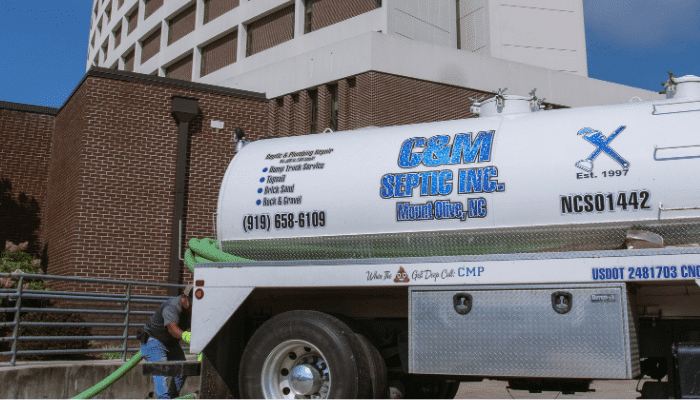
Most homeowners know they're supposed to pump their septic tank on a regular schedule. Not everyone does it. Life gets busy, the system seems fine, and it's easy to put off a maintenance task that happens underground and out of sight.
But what actually happens if you skip it for years — or decades? The answer is worth understanding before you find out the hard way.
Your Septic Tank Is Filling Up Right Now
Even if your system is working perfectly, it is filling up. That's not a problem — it's how septic tanks are designed to work.
Wastewater from your home enters the tank and separates into three layers. Solid waste settles to the bottom and forms sludge. Grease and lighter materials float to the top and form scum. The clarified liquid in the middle flows out to the drain field, where it's filtered through soil and returned to the groundwater.
The sludge and scum layers don't leave the tank on their own. A pump-out removes them. Without one, they build up — and eventually, they start causing problems.
If your system is filling up faster than expected, it's worth reading about the specific causes. But even a perfectly functioning system will reach capacity if it's never pumped.
What Actually Happens When You Don't Pump
The consequences of skipping pump outs don't usually announce themselves all at once. They build gradually — and each stage is more expensive than the one before it.
Stage 1: Reduced Tank Capacity
As sludge builds up at the bottom of your tank, the functional volume of the tank decreases. A 1,000-gallon tank with 300 gallons of accumulated sludge is effectively operating like a 700-gallon tank. Your system has to work harder. Wastewater spends less time in the tank, which means solids don't fully settle before liquid flows out to the drain field.
At this stage, your system still appears to be working. There are no obvious signs of trouble.
Stage 2: Solid Waste Reaches the Outlet
As sludge continues to rise and scum continues to thicken, both layers eventually approach your tank's outlet baffle — the point where clarified liquid exits toward the drain field. When solid waste starts passing through the outlet, it's no longer heading into a drain field designed to handle liquid. It's carrying particles that clog the soil and biofilm that the drain field depends on.
This is the tipping point. Once the drain field starts receiving solid waste, the damage begins accumulating.
Stage 3: Drain Field Damage
The drain field is the most expensive component of your septic system. It's a network of perforated pipes buried in gravel and soil, designed to slowly disperse liquid. Solid particles clog the pores in the gravel and soil, reducing the field's ability to absorb and treat effluent.
Initially, this shows up as slow drains throughout the house. Then gurgling sounds. Then, eventually, sewage will surface in your yard or back up into your home.
A septic repair at this stage might involve replacing distribution boxes, repairing or jetting lines, or restoring sections of the drain field. A full drain field replacement — which can run anywhere from $5,000 to $20,000 or more, depending on system type and lot conditions — becomes necessary when the damage has progressed too far to remediate.
The EPA estimates that a properly maintained septic system can last 25 to 30 years. A neglected one can fail in a fraction of that time.
Stage 4: Complete System Failure
A completely failed septic system is a public health hazard. Untreated sewage surfacing in a yard or backing up into a home creates a situation that Wayne County Environmental Health may require to be remediated before the property can be occupied. North Carolina law requires property owners to maintain their systems in proper working condition — a failed system isn't just expensive, it can affect your ability to live in or sell your home.
A new septic system installation in Eastern NC typically costs between $6,000 and $15,000 for a conventional system, more for an alternative or engineered system on a difficult site. Compare that to the cost of routine pump-outs over 30 years.
How Long Can You Go Without Pumping?
There's no universal answer, but here's a practical framework:
Under 5 years with regular use: Most households won't see visible problems yet, though sludge is accumulating. A pump out now prevents anything from progressing to Stage 2.
5–10 years without pumping: Depending on household size and tank capacity, the sludge layer may be approaching the outlet baffle. This is the window where a pump out often reveals early problems that are still inexpensive to fix. A septic inspection during the pump out is worth doing here.
10+ years without pumping: At this point, there's a meaningful chance that some solid waste has been reaching the drain field. A pump out is still the right first step, but you should expect the technician to flag potential drain field stress. The sooner you act, the more options you have.
20+ years without pumping: In Eastern NC, high water tables and coastal plain soils mean drain fields are already under more stress than in drier regions. A system that's never been pumped in two decades almost certainly has compromised drain field function. A full evaluation is needed.
If you genuinely don't know when your last pump out was — or whether one was ever done on your property — the answer is to schedule one now and ask the technician to assess the sludge depth. That number tells you a lot about where you stand.
The Eastern NC Factor
This region has soil conditions that make regular maintenance especially important. Wayne County and the surrounding Eastern NC coastal plain are characterized by high water tables, sandy soils, and periods of heavy rainfall that can oversaturate the ground around your drain field. When the soil is saturated, your drain field can't disperse effluent at its normal rate — which puts extra pressure back on the tank.
That means the standard "pump every 3 to 5 years" guidance is a floor for Eastern NC homeowners, not a ceiling. Households with heavier water use, large families, or drain fields in low-lying areas should lean toward the shorter end of that range.
Signs You're Already Overdue
If any of these sound familiar, your system is trying to tell you something:
- Slow drains throughout the house — not just one fixture, but multiple
- Gurgling sounds from toilets or drains, especially when water is running elsewhere
- Sewage odors inside the house or near the tank and drain field area
- Lush, suspiciously green grass directly over your drain field
- Standing water or soggy spots near the septic area, even after dry weather
- Sewage backing up into a tub or toilet
Any one of these warrants a call. Multiple at once means you shouldn't wait.
What a Pump Out Reveals
One thing that surprises homeowners who haven't had their system serviced in years: a pump out isn't just maintenance. It's information.
When our team pumps out your septic tank, we check the inlet and outlet baffles, look for cracks or root intrusion, assess the sludge depth relative to tank capacity, and flag anything that needs attention. Broken baffles, for example, are a common finding — they're inexpensive to replace when caught during a routine pump out and expensive to ignore. We've pulled trucks away from jobs where we found sludge on the verge of overflowing to the drain field. Those homeowners avoided thousands of dollars in damage because they finally scheduled the service.
The Math Is Simple
A routine pump out costs a few hundred dollars. Drain field repair starts in the thousands. A full system replacement can cost thousands, and the price goes up from there. Regular maintenance isn't just good practice — it's the cheapest form of septic insurance available.
If it's been more than 3 years since your last pump out — or you genuinely can't remember the last one — now is the right time.
C&M Plumbing & Septic has been serving Wayne County, Goldsboro, Mount Olive, Clinton, Dudley, Smithfield, Seven Springs, and all of Eastern NC since 1997. Call 919-658-6109 or schedule your septic tank pump out online — before a skipped service becomes an expensive repair.
Without regular pump outs, sludge and scum accumulate until solid waste begins reaching your drain field. This clogs the soil, reduces the drain field's ability to process effluent, and eventually causes system failure — which can require a full replacement costing $6,000 to $15,000 or more.
Most households should pump every 3 to 5 years. Going beyond 10 years without a pump out significantly increases the risk of drain field damage. Beyond 15 to 20 years, system failure is a real possibility, especially in Eastern NC where high water tables put extra stress on drain fields.
Some larger tanks in small households may go close to 10 years without visible problems, but sludge is still accumulating and approaching the outlet. At the 10-year mark, a pump out often reveals early-stage problems that are still inexpensive to fix. Waiting longer narrows your options.
Slow drains throughout the house, gurgling sounds from toilets or drains, sewage odors near the tank or yard, soggy spots over the drain field, and sewage backups are the most common signs. Any of these warrants an immediate call to a septic professional.
Yes. A failed or aging septic system must be disclosed in real estate transactions in North Carolina and can significantly reduce a home's value or delay a sale. Buyers typically require a septic inspection, and a compromised system often requires repair or replacement as a condition of sale.