


Protect Your Home With Regular Septic Pump-Outs in Eastern, NC
There's a little bit of biological magic that happens when wastewater enters your septic tank. Grease and oils (called "scum") float to the top, while solid waste (called "sludge") settles to the bottom. The clarified water between flows is discharged to your drain field, where it's slowly released into the soil and returned to the groundwater.
The problem is that the scum and sludge don't go anywhere on their own. Over time, they build up until they start affecting your tank's performance and eventually your drain field. That's where C&M Plumbing & Septic comes in.
Our professional pump-out service removes accumulated waste, so your system keeps working the way it should. And unlike companies that simply empty and leave, every pump-out we perform includes a basic inspection of your tank's baffles and overall condition, so small problems get caught before they turn into expensive repairs.
If it's been a while since you've had a septic pump-out, there's no better time than now! Contact our experts by calling 919-658-6109 or messaging us online today!
Septic Pump Out FAQs
Most pump-outs take 30 minutes to an hour, depending on tank size, how accessible the lids are, and the condition of the tank.
Yes. Every pump-out includes a basic inspection. We check the inlet and outlet baffles, look for cracks or root intrusion, and flag any early signs of drain field stress.
Avoid wipes (even "flushable" ones), grease and cooking oils, feminine hygiene products, paper towels, and harsh chemical drain cleaners. These all shorten the time between pump-outs and can damage your system over time.
Sometimes, but not always. If your drain field has already failed or there's a line blockage, a pump-out may provide temporary relief but won't solve the underlying problem. We'll let you know what we find and what you actually need.
Signs include sewage surfacing in your yard, persistent odors even after a pump-out, and drains that remain slow despite no other obvious cause. If you're seeing any of these, call us 919-658-6109 , and we'll take a look.
What Happens During a Septic Pump-Out?
A lot of homeowners have never seen a pump-out up close, so here's exactly what to expect when our team arrives.
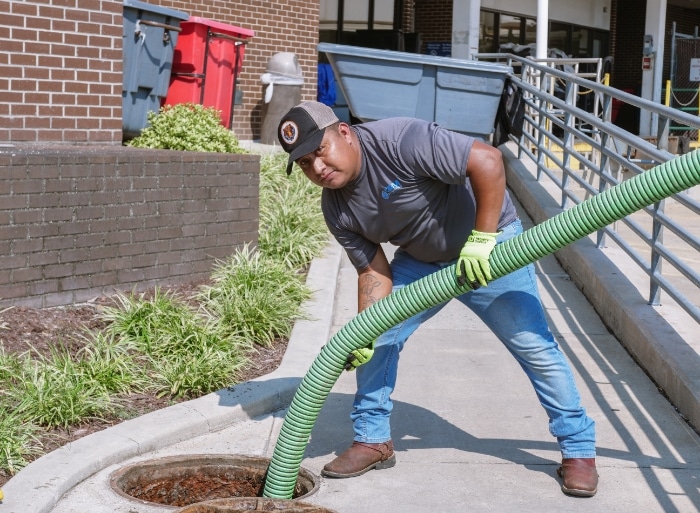
We start by locating and uncovering your septic tank lids and checking the waste levels inside. From there, we connect our professional vacuum truck and remove all liquid and solid waste from the tank. Once it's empty, we inspect the inlet and outlet baffles, check for cracks, root intrusion, or signs of drain field stress, and make sure the lids are securely replaced before we leave.
Most standard pump-outs take between 30 minutes and an hour, depending on tank size, accessibility, and condition. We leave your yard clean, your system protected, and you informed about anything we found.
How Often Does a Septic Tank Need to Be Pumped?
There's no single answer. It depends on your household:
- Household of 2–3 people: Every 3–5 years
- Larger households or smaller tanks: Every 2–3 years
- Homes with garbage disposals or heavy water use: More frequently, since disposal waste, long showers, and back-to-back laundry loads all add up faster than most homeowners expect
The biggest mistake we see is waiting until there's a problem. By the time sewage is backing up or odors are surfacing in your yard, you may be looking at drain field damage and not just a routine pump-out. Routine maintenance is far cheaper than repairs, and staying on schedule can save thousands of dollars over the life of your system.
Signs Your Septic Tank Needs Pumping Now
Your system will usually give you warning signs before things get serious. Watch for:
- Slow drains throughout your home. When multiple drains are sluggish at the same time, your tank is likely too full to accept wastewater properly. This whole-house slowdown is one of the earliest signals to call us.
- Gurgling sounds from drains or toilets. Strange noises mean air is getting trapped because water isn't moving through your system correctly, and that's often a sign the tank needs attention before things get worse.
- Sewage odors near your tank or yard. Smells near your tank or drain field mean your system is working harder than it should. Don't ignore them because they're an early warning.
- Standing water or soggy spots near the drain field. Surface water near your septic area is a sign the system is overloaded and can't process waste properly. This is a health hazard that needs immediate attention.
- Your septic alarm is going off. These alarms exist for a reason. If it's beeping or flashing, don't wait. Call us before a small issue becomes a major repair.
- It's been more than 3 to 5 years since your last pump-out. Even if everything seems fine, if you can't remember your last service, it's time.
Common Issues We Find During Pump-Outs
Because we inspect every tank we pump, we frequently catch problems homeowners didn't know existed. Common findings include:
- Broken or missing baffles
- Tree roots growing into the tank or lines
- Cracked tank walls
- Excessive sludge buildup from years of skipped service
- Early signs of drain field failure
Catching these early can mean the difference between a simple repair and a full system replacement. We recently serviced a home where sludge was on the verge of overflowing into the drain field. Because we caught it during a routine pump-out, the homeowner avoided thousands of dollars in damage.
Septic Tips for Eastern North Carolina Homeowners
Eastern NC has its own challenges when it comes to septic systems. High water tables and sandy soils mean drain fields can saturate faster than in other regions, especially after heavy rainfall. When the ground is oversaturated, your system simply can't drain the way it's designed to, which puts extra stress on the tank.
That's why regular pump-outs are especially important here. The less strain on your system during those wet seasons, the better.
A few habits that help your system between pump-outs:
- Avoid flushing wipes (even "flushable" ones), feminine products, paper towels, or anything non-biodegradable
- Keep grease and cooking oils out of your drains
- Space out laundry loads rather than running multiple cycles back to back
- Limit garbage disposal use, since food waste adds up quickly in the tank
What to Do If You Think Your System Is Backing Up
If you're seeing sewage backups, strong odors, or standing water in your yard, stop using water immediately. Don't flush toilets or run any taps, and call a professional right away. A pump-out may relieve pressure, but recurring backups can also indicate drain-field failure, line blockages, or a system design issue. We'll give you an honest assessment of what's actually going on and what it will take to fix it.
Say Goodbye To Scum & Sludge
A full septic tank has the potential to cause a range of issues, none of them particularly good. Make sure to stay on top of your pump-out schedule so you don't have anything to worry about - and the team here at C&M can help you do exactly that. To schedule your pump-out, send us a message online or call 919-658-6109 today!